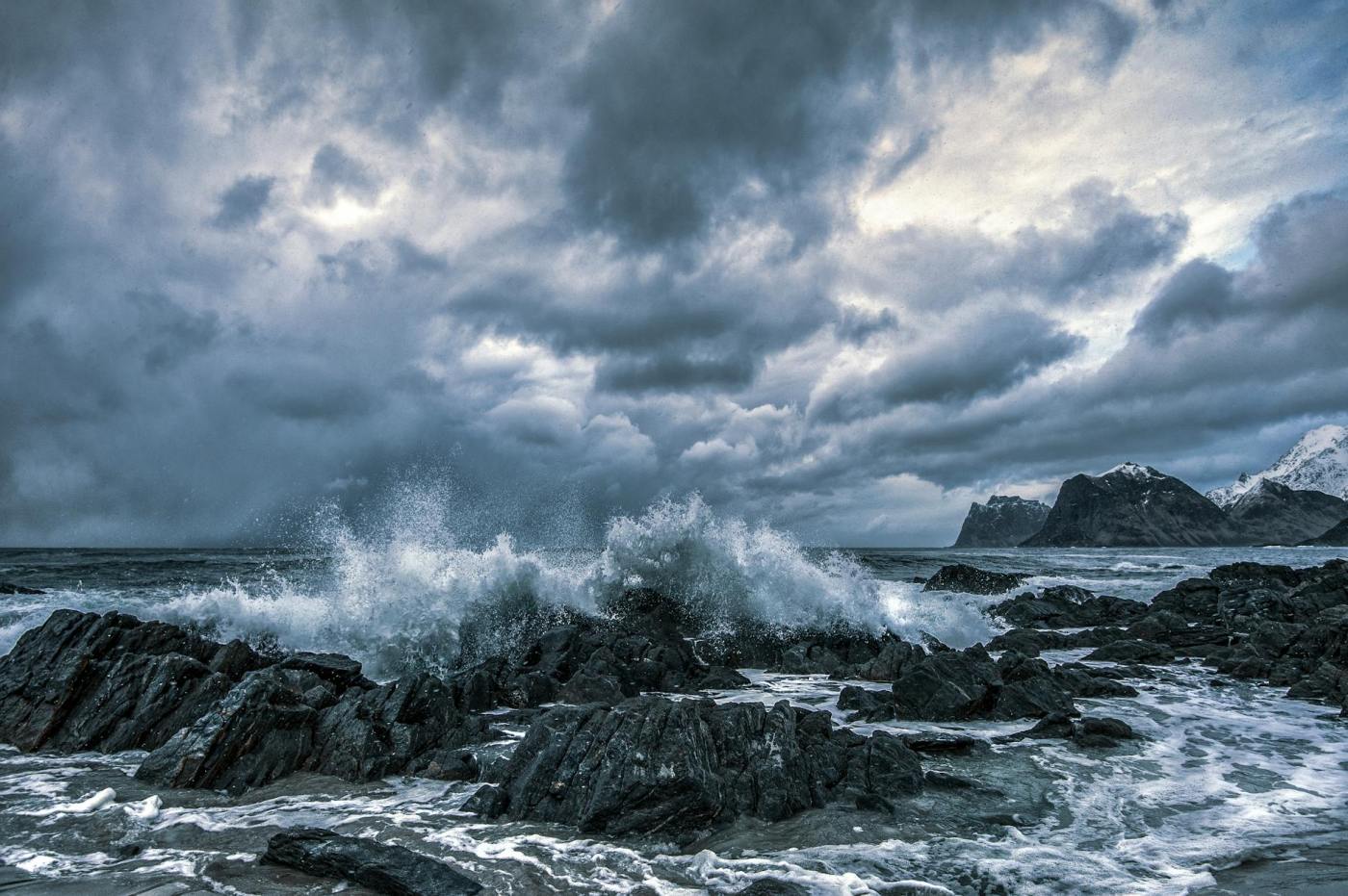
Storms are guaranteed in this life on Earth. Storms come and go as they wish, and they cause damage everywhere they go, sweeping through landscapes with an unstoppable force. They leave nothing untouched and no stone unturned, ravaging homes, uprooting trees, and altering the very fabric of nature. Death and destruction follow them relentlessly, creating chaos in their wake and reminding us of the power and unpredictability of the elements. This is our normal perspective of storms; while it is true that we often focus on the immediate devastation, we sometimes miss the big picture. We often lose sight of the author of the storm, the one whom it obeys and does the will of. In every gust and rumble, there lies a deeper narrative, one that speaks not only of turmoil but also of renewal, transformation, and the cycles of life itself that can emerge from the ashes of destruction, teaching us resilience and inviting us to see beyond the tempest. Inviting us to throw ourselves at the mercy of the one who wills the storm.
The Presence of God in Nature’s Fury
“He covers the heavens with clouds; he prepares rain for the earth; he makes grass grow on the hills…. fire and hail, snow and mist, stormy wind fulfilling his word!” Psalm 147:8; 148:8
It’s the word of God that creates chaos and power, shaping our world through dynamic forces. Even in this turmoil, He remains in perfect control of the storm and its destruction, directing every element with divine precision. The storm acts only as God commands, showcasing His authority and wisdom in each gust of wind and clap of thunder. God is the creator of nature; He makes the grass grow in the sun and allows flowers to fade, reminding us of life’s cycle. He brings wind, snow, fire, hail, and lightning to carry out His will, each element a reflection of His power and purpose, highlighting our place in the vastness of creation. God’s presence is seen in the changing seasons and the rhythms of life, guiding the universe with love and authority.
What is the purpose of storms?
“By the breath of God ice is given, and the broad waters are frozen fast. He loads the thick cloud with moisture, the clouds scatter his lightning. They turn around and around by his guidance, to accomplish all that he commands them on the face of the habitable world. Whether for correction or for his land or for love, he causes it to happen.” Job 47:10-13
Job mentions 3 purposes for God’s use of storms: for correction, for His land, and for love. We know from such examples as Noah that God has used the waters for the correction of the Earth, demonstrating His authority and the sanctity of His creation. There have been numerous instances throughout Scripture where storms have acted as divine instruments, shaping the course of history and humanity’s relationship with the divine. Furthermore, we recognize that God supplies storms for the purpose of providing growth to His creation, as tumultuous weather often leads to fruitful seasons, turning barren landscapes into flourishing grounds. The harsh conditions bring about resilience, and through adversity, we often discover the strength of our faith. Ultimately, we know that He uses His power within the storms to display His love. This love can puzzle us at times because it isn’t a display of love that we are familiar with; rather, it’s a profound and complex form of love. We are used to the love that comforts us and clearly makes us feel cared for, filled with warmth and reassurance. However, this is the type of love that is hidden and brings about unexpected opportunities for thanksgiving and reflection upon the goodness of God. These storms can serve as catalysts for change, inviting us to pause and recognize the blessings that emerge from trials. Surely, this is an example of the love displayed through storms, leading us to deeper understanding and appreciation of God’s intricate design for our lives. And this love that is wrapped up in storms can bring those who are far off near to God during these immense storms.
A Time of Weeping and Reflecting
“Rejoice with those who rejoice, weep with those who weep.” Romans 12:15
After such storms are over, there always seems to be a stillness and peace in the air. However, it doesn’t take long to hear the weeping and mourning of others. The devastation of the storm is on full display for all to see in the following morning light. As Christians, we are instructed to weep with those who weep. After such rough storms, we don’t have to go far to find someone mourning the loss of property or, even worse, a loved one who might have been lost due to the storm. It is in these moments that we might be able to serve others as light among the darkness. Sometimes it looks like sharing eternal hope in Christ, and other times it might be as simple as giving them a shoulder to cry on. This is a time when churches and communities come together for the good of the broken.
“I remember the days of old; I meditate on all that you have done; I ponder the work of your hands.” Psalm 143:5
Another aspect of making the most of storms is a time of reflection. A time to think back on all that God has provided, that could be family, friends, or possessions. But ultimately we should seek to reflect on the life of Christ and all that He has done for us: satisfying God’s wrath and living the life of perfect obedience, two things that we could never do. This is a great thing to ponder after the storm or even amidst the storm. Being that none of us know when our time is up here on Earth, there is no better time than the present to realize how deep our need for a savior is. And after such devastating storms, there is no better time than to thank Him for everything.
For the Christian, we can have such hope and peace amidst the storm, knowing that it is for God’s glory and our benefit, understanding that God works all things for the good of His people.
“For this light momentary affliction is preparing for us an eternal weight of glory beyond all comparison, as we look not to the things that are seen but to the things that are unseen. For the things that are seen are transient, but the things that are unseen are eternal.” 2 Cor 4:17-18
Do not be afraid.
“And a great windstorm arose, and the waves were breaking into the boat, so that the boat was already filling. But He was in the stern, asleep on the cushion. And they woke Him and said to Him, ‘Teacher, do you not care that we are perishing?’ And He awoke and rebuked the wind and said to the sea, ‘Peace! Be still!’ And the wind ceased, and there was a great calm. He said to them, ‘Why are you so afraid? Have you still no faith?'” Mark 4:37-41
Faith is something we can lose sight of amidst the raging storm. And yet it is our anchor to remain steadfast during the most damaging of storms. Having trust in God and realizing that He is in full control of the storm will lead to such a peace that transcends understanding, a peace that wraps around us like a warm blanket, shielding us from the harshness of life’s dangers. Understanding that the storm is merely just an instrument in the hand of God will help you not to fear such chaos, but rather view it as a transformative experience meant to strengthen our resolve and deepen our faith. God has a plan for all of us, whether it be survival or being called home during a storm. Each experience, each challenge we face, serves a purpose within His grand design, one that we may not fully comprehend but can trust is for our ultimate good. Take this time to make sure that you have a relationship with Christ, who walks beside us even in our darkest moments, and praise Him in this storm, for it is through these trials that our character is refined and our faith is made stronger. Do not be afraid for the Lord is near.


Leave a comment