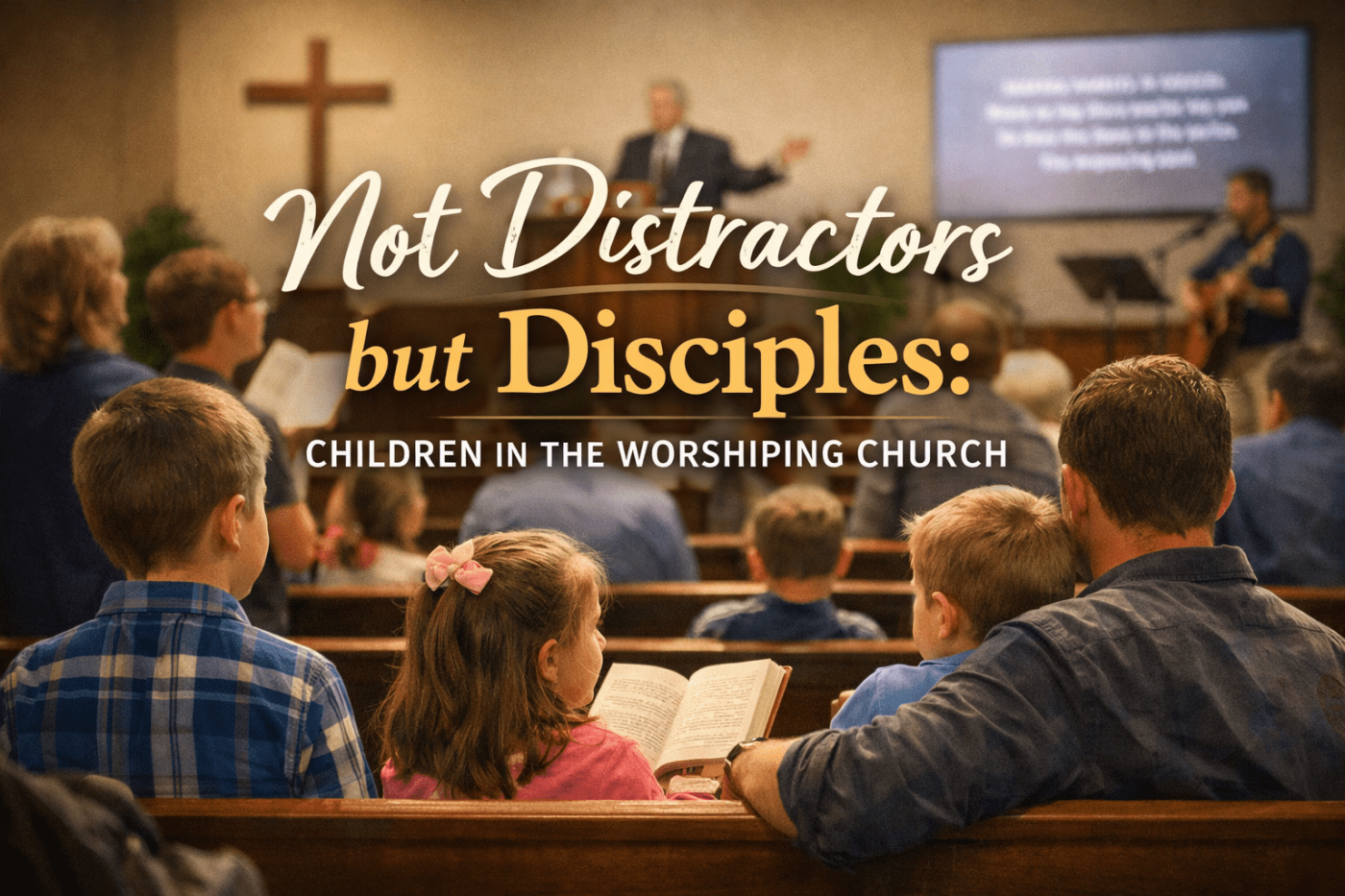
When inviting friends to our humble OPC church, some have expressed concern about the lack of a children’s church. They wonder whether their children will be able to sit through the sermon, or worry that they might be a distraction—to themselves or to the rest of the congregation.
While children’s church is often offered as a pragmatic solution to streamline the liturgy for adults, it does so at a significant theological cost. By separating children from the gathered assembly, we unintentionally treat them as distractions to be managed rather than disciples to be formed. For many church-goers today, this represents a significant paradigm shift. Yet this style of worship is not only the historic practice of the church—it is the clear biblical pattern, given so that when we “gather the people together, men and women and little ones… that they may hear and that they may learn to fear the LORD your God and carefully observe all the words of this law1“
Children worshiping with their parents in a corporate setting–integrated worship–has been a practice since the Israelites were rescued from Egypt. As Moses instructed the people2, we see that children are present when God’s law is taught and discussed— in fact the people are told to diligently teach God’s word to their children. It was part and parcel of the daily communal life for the congregation in the wilderness.3 When Moses later renewed the covenant with Israel4, the children were part of that solemn oath that God would be their God, and they would be part of his people. As Joel is commanded by God hundreds of years later, children are called as part of the sacred assembly5 —even the nursing infants among them.
In the days of Jehoshaphat,6 children stood as part of the gathering for national worship and prayer with everyone. Later during the rededication within Nehemiah’s day,7 all those who could understand were brought to listen to Ezra read God’s law. We see time and time again that when God calls His people together, children are explicitly included—they are even considered holy8 and set apart within the church different than pagan children. No one batted an eye during corporate worship when children were part of the gathered assembly–a far cry from today when it seems that spotlights are placed upon parents who wish to worship with their children.
Not only were children in attendance, but they were active participants in praise and response. The Psalms are filled with the praise of children. God ordains these praises as a strength to crush His enemies.9 Take note that it is not who we see as the high and mighty, but babes and nursing infants whom God uses to silence the enemy and avenger. Psalm 148:12-13 says both “young men and maidens; Old men and children. Let them praise the name of the LORD.” The reason for this mixed group is clear–God’s works, glory, and attributes are proclaimed in this way to help instruct these very children so that they might have a hope in the same God and promises that we adults do.10 While these examples all come from the Old Testament which of itself is sufficient, we see a similar pattern in the New Testament as well in the Pauline Epistles. Paul directly addresses the children in the gathered church with specific instruction to honor their parents.11 In fact, Jesus Himself welcomes children into His presence and blesses them, defending them when they praise Him in the temple.12
Why is this all so important to have integrated worship? Can’t children receive these benefits within children’s church? When we approach children with this attitude, we are catechizing ourselves with the falsehood that “The real church happens elsewhere. This is just preparation.” While children receive some sort of instruction in children’s church it denies the formation that God uses to shape children. When worship is integrated it tells them “You belong here. God speaks here. And He is shaping you—even now.” Children learn from the adults how to confess sin, submit to preaching, sing when the world’s woes afflict oneself, and how to worship together under God’s Word. This pattern is echoed in scripture13 as we learn from children too— their presence visibly proclaims that God’s covenant extends across generations, reminding us of God’s faithfulness.
This leads to the next necessary point: integrated worship requires the congregation itself to be formed. Our hearts must be trained to receive children as fellow worshipers. Children are not going to act perfectly in the church setting every week—and neither are adults. If all children needed were a set of rules to follow instructions flawlessly, there would be no need for a Savior. Just as we fall short of God’s commands, so too do children fall short of perfect obedience. For fellow congregants, these moments present an opportunity to practice grace. They are not occasions to correct or intervene, but to patiently bear one another’s burdens, thereby fulfilling the law of Christ.14 Parents, these situations allow for calm, faithful instruction. When necessary, stepping outside to provide discipline and then rejoining the congregation is not a failure, but a faithful act of discipleship. It may take time, but the fruit of patient, consistent training is real.
For officers of the church, this is an opportunity to shepherd well. A church prepared for children is a church that truly welcomes them. Thoughtful tools—such as Children’s Bulletins or other age-appropriate aids—can help children engage the liturgy while acknowledging their energy and limitations, without removing them from the worshiping assembly. I am encouraged by a church in my presbytery that provides tables with biblical coloring pages in the back of the sanctuary for children if they need to have a moment. It is a far better ministry to these children than having their parents whisk them away to a separate room where they miss out on hearing the worship of God’s people. Ministers, ensure that you are cognizant of children in your sermon preparation. This is not a call to patronize or condescend in your sermon for a particularly aged audience, but rather ensuring that mature themes are presented in an appropriate manner. It is possible to explain the unfaithfulness of Hosea’s wife without getting into the tawdry details of the threshing floor.15
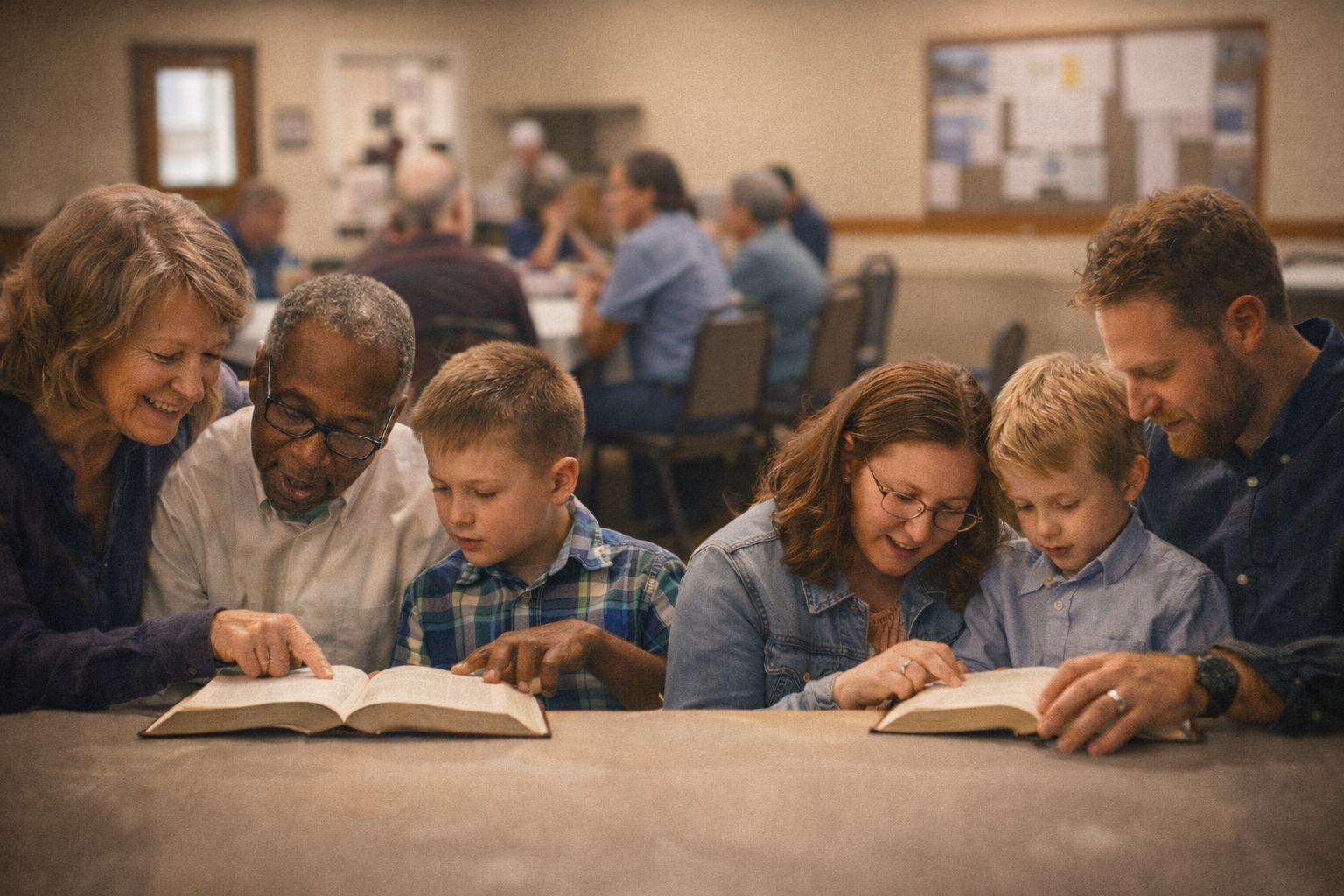
Children can learn Bible stories in other places than the sanctuary–in fact, Family worship is a tried and true method of raising a child up in the fear an admonition of the the Lord. But only in integrated worship do they learn who they are—members of God’s people; what worship is—God-centered, communal, formative; and where they belong—not on the margins, but in the assembly. When we replace integrated worship with children’s church we lose more than the presence of children–we are disobedient to God’s design for worship. Children may not understand the sermon immediately, but comprehension is not required for worship. Children learn by watching the saints, and are shaped deeply by the songs, prayers, and doxologies in the weekly rhythm of the church. This is a slow, consistent formation to help them grow–and frankly– a slow and consistent formation to help adults be molded to God’s will as they witness to the most precious disciples of the flock.

- Deuteronomy 31:12 NKJV ↩︎
- Deuteronomy 6:4-9 ↩︎
- Acts 7:38 ↩︎
- Deuteronomy 29:10-15 ↩︎
- Joel 2:15-16 ↩︎
- 2 Chronicles 20:13 ↩︎
- Nehemiah 8:2-3 ↩︎
- 1 Corinthians 7:14 ↩︎
- Psalm 8:1-3 ↩︎
- Psalm 78:1-7 ↩︎
- cf. Ephesians 6:1-3, Colossians 3:20 ↩︎
- cf. Matthew 19:14; 21:15-16; Mark 10:13-16; Luke 18:15-17 ↩︎
- cf. Exodus 12:24-27; Psalm 102:18; 145:4; Isaiah 38:19 ↩︎
- Galatians 6:2 ↩︎
- Hosea 9:1-2 ↩︎

Leave a comment