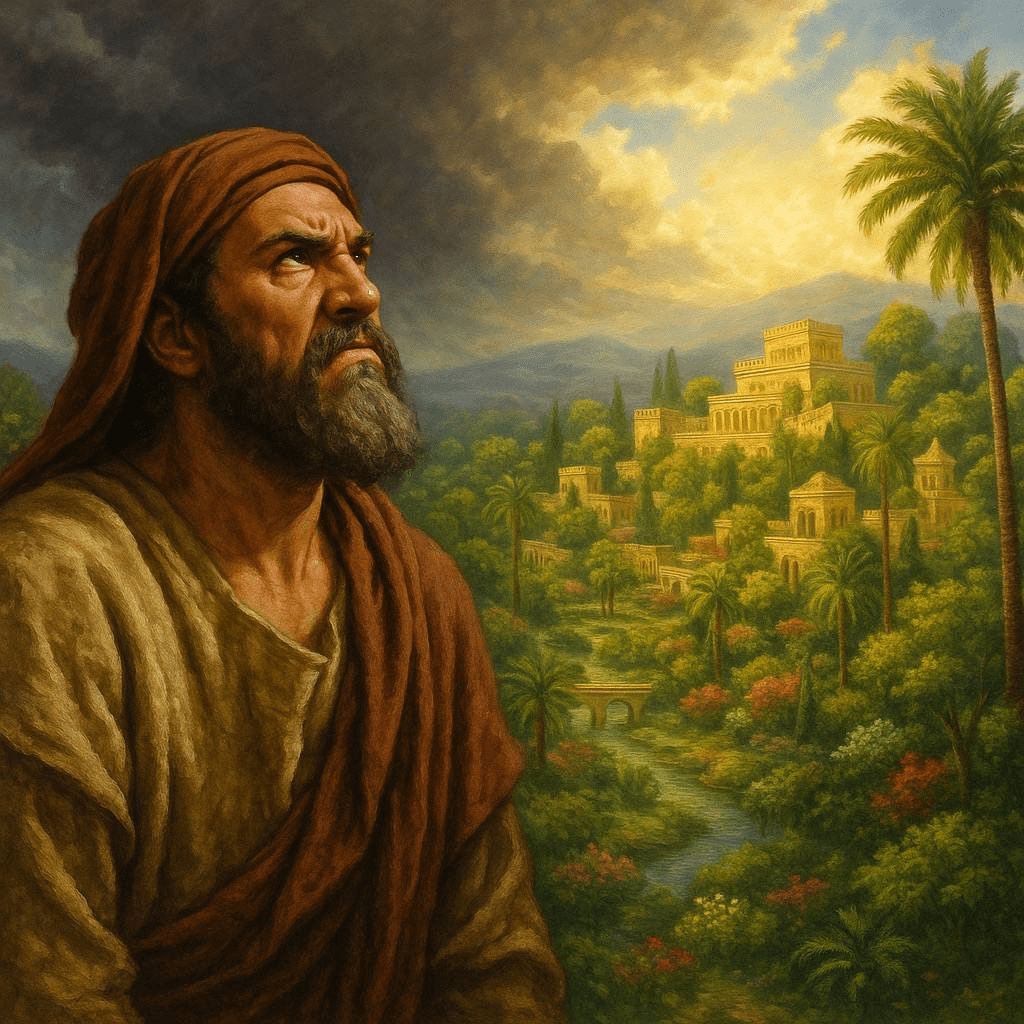
We are at it again. Denominations are scrutinizing internet trolls, opening their Scriptures and catechism to engage in yet another battle. Racism is addressed in the Bible, but recently, it has been noted that the word “racism” did not exist in the original texts; thus, those who argue to “find it in the Bible” are merely gaslighting, lacking true insight, and only demonstrating an understanding of doctrine that could lead to being told, “Away from me, I never knew you.”
Jesus spoke of hate in the heart during the Sermon on the Mount (Matt. 5:22), offering a neighbor analogy. Jonah harbored disdain for Nineveh, the city he was called to evangelize (read the whole book). Miriam faced consequences with leprosy (Numbers 12:1), while Peter exposed his weakness through ethnic partiality (Gal. 2:11–14), having been instructed not to call anything unclean that God has declared clean. Greek-speaking widows were neglected, prompting the creation of Deacons to ensure equitable service and allow the Apostles to focus on teaching—similar to the advice given to Moses by his father-in-law.
This thinking is against (Gen. 1:27) the “Imago Dei.” The teaching of (Acts 17:26—they really don’t like this verse or have a desire to understand), against partiality that God has none of (Rom. 2:11), against who Christ died for in His elect (Rev. 5:9), and a misunderstanding of how Christ upped erry (that is, every in Southern USA slang) commandment.
Hence, we must take a look at the definition of racism… by what definition? Secular and biblical.
Webster: A belief that race is a fundamental determinant of human traits and capacities and that racial differences produce an inherent superiority of a particular race.
Oxford: The unfair treatment of people who belong to a different race; violent behavior towards them.
Biblical: We are hashing that out here in an ADHD kind of way (welcome to Squirrel City).
We are now going to attempt to find the two definitions laid out by Webster and Oxford in the Bible.
1. Egypt and their oppression of the Jews — Exodus 1:8–14.
What happened there? Enslaved and oppressed because of fear that the Egyptians had. What was that command from God? Oh yeah:
“So do not fear, for I am with you; do not be dismayed, for I am your God. I will strengthen you and help you; I will uphold you with my righteous right hand.” — Isaiah 41:10.
So there is that. For today, we are commanded not to fear ANYTHING—including people—as God is more powerful than a person or an ethnicity looking to genocide you by the sword, by birth rates, or by converting you to demon worship.
2. Haman’s ethnic hatred of the Jews…
Well, how’d the ethnic hate in his heart work out for him in the end? Being impaled on a pole and left hanging there to die is a way to gauge how that went for him. Yes, I think Haman was impaled, as he would be hanging from a post in the most public and gruesome way. And, well, I don’t watch Western movies much anymore—although Hang ’Em High was a great movie.
https://learn.ligonier.org/articles/was-haman-hanged-or-impaled
3. Romans 2:11 — God shows no partiality.
So showing partiality by race alone also touches on what Paul said in Galatians 6:9–10:
“And let us not grow weary of doing good, for in due season we will reap, if we do not give up. So then, as we have opportunity, let us do good to everyone, and especially to those who are of the household of faith.”
That red word and the words before it. We are to do good to erryone (that is beyond everyone—look for Voddie Baucham’s definition of errywhere)—especially those in the faith. So do good to everyone, but when you find another brother or sister in Christ… go out of your way to help and be good to them on purpose, as it is commanded. And I see no “if they are born in the same city or nation as you.”
So having a sense in your heart to neglect someone based on status, melanin (yes, I fixed that—melatonin is the sleep aid), even government officials (pause for repentance)…
We are commanded not to do that.
Gnosticism was declared heresy EARLY on by Irenaeus of Lyon in the book simply titled in English Against Heresies.
Took on the superior knowledge, the food, by nature. In fact, in Book 4, chapter 37, he states,
“It is not by nature, but by faith, that men are justified.”
(I just heard some CIs gasp).
What does that mean in the context of his day? Simple. It contradicts any form of salvation based on race, nature, or class. Also from that series of books (there are five, and everyone should read them).
Let’s move on to the Sermon on the Mount, where Christ makes everything more clear—what the Spirit of the Law is, not just the outward observance.
These are teachings on humility and mercy, reconciliation, love for enemies, sincerity in righteousness, no partial judgment, the fruit of faith, and what true obedience is (hint: motives driven by love for God). I’m grouping these, so the Scriptures may be out of order.
“Blessed are the poor in spirit, those who mourn, the meek, and the merciful.”
Racism is the opposite of being poor in spirit. It causes mourning, is merciless (withholds compassion, which we are commanded to show), and divides rather than unifies.
“Everyone who is angry with his brother will be liable to judgment… whoever says, ‘You fool!’ will be liable to the hell of fire.”
This should be an easy one—racism is rooted in hatred, anger, pride, and contempt. Seems so simple a caveman could do it, right?
“Love your enemies.”
The one command everyone wishes was left out. “Pray for those who persecute you”… or is that just me?
We are called to be perfect as our Heavenly Father is perfect—and He shows no partiality and commands us not to either. Christ erases enemy lines among all who are in Him.
True Righteousness.
Now we tackle wokeness and racism within that context. Not only did the SCOTUS rule (Ames v. Ohio), but much of this is simply a show—empty performance, not true righteousness.
Take Martha’s Vineyard, for example. They called for immigration compassion (Mass. is unconstitutional in its stance, already breaking the law of God), but when a busload arrived, they clapped as they were sent away. This reveals that many socialists are fake, liars, and selfish racists all at once. I hope that example highlights the heart issue woven throughout all of this.
The Sermon on the Mount is where Jesus held up a mirror for us to see ourselves. This Scripture truly shows that:
“The word of God is living and active, sharper than any two-edged sword, piercing to the division of soul and of spirit, of joints and of marrow, and discerning the thoughts and intentions of the heart.”
Finally, let’s look at the Book of the Revelation of Jesus Christ.
In Revelation 5, there is a song sung, and it is sung by:
“And by your blood you ransomed people for God from every tribe and language and people and nation, and you have made them a kingdom and priests to our God, and they shall reign on earth.”
This shows Christ’s redemptive work is truly for ALL ethnic groups—also showing no partiality.
Finally, Revelation 18 — get your Sacred Harp voices ready!
Babylon is fallen to rise no more!
What is Babylon? Many things. Many different people think different things, but one thing they have to agree on is some of the things (system) that are part of Babylon:
“And the merchants of the earth weep and mourn for her, since no one buys their cargo anymore—cargo of gold, silver, jewels, pearls, fine linen, purple cloth, silk, scarlet cloth, all kinds of scented wood, all kinds of articles of ivory, all kinds of articles of costly wood, bronze, iron and marble, cinnamon, spice, incense, myrrh, frankincense, wine, oil, fine flour, wheat, cattle and sheep, horses and chariots, and slaves, that is, human souls.”
Can we say last but not least? Slave… HUMAN souls. As a human—as the Bible says, created in the Imago Dei—all the commandments from the Sermon on the Mount, all the comments from the Holy Spirit written in the entirety of the Bible…
So let us meditate on the context of the entire redemptive history of this planet. Let us meditate on what was written in the Gospel of Mark, so simply put:
“And you shall love the Lord your God with all your heart and with all your soul and with all your mind and with all your strength. The second is this: ‘You shall love your neighbor as yourself.’ There is no other commandment greater than these.”
How can you love someone as yourself if you think yourself superior and of more worth than another?
All in all, we see Christianity being the most persecuted religion in the world (racism). We are commanded not to be like the world. We have been called out. If the love of the world is in you, then the love of the Father is not. Anyone who loves the world has not the love for the Father.
So why act like the world if you are seated with Christ, you cannot be seated with him and act like the world.
Don’t let the world determine where you can use your energy with pride and anger. We can be angry and not sin. If your anger becomes bitterness, you are sinning.
I will end with the straight-to-the-point Thomas Watson:
“God hath made all nations of one blood… There should be no pride in nations or persons. All came from one root, and must return to one dust.”
We are not as different as we want to be. So have mercy, patience, and compassion. Do not excuse your sin. A pastor said one time, “I wish I hated my sin as much as I hate other people’s sin.” It really brings the wise words of John Owen into frame:
“Be killing sin or it will be killing you.”
May we heed Peter’s words, as they are a repeated command (and we know if Jews repeat themselves, it is serious):
“But as he who called you is holy, you also be holy in all your conduct.”
What is the conduct in your heart?


Leave a comment