
Sometime last year, my father-in-law was visiting us from out of state. On the drive home from the airport, our conversation turned to the upcoming Lord’s Day service. Knowing that our previous church practiced a members-only approach to Communion, he expressed some concern about whether he would be able to partake at our current church. I reassured him that the OPC does not require local membership, but rather fences the table to baptized church members in good standing. His response was one of both relief and hesitation. “But it’s the Lord’s Table, isn’t it?” he asked. “Christ opens Himself to all.”
At the time, I replied by pointing to Paul’s warning in 1 Corinthians 11 about the danger of receiving the Supper unworthily. Yet with time, I’ve come to see that my father-in-law’s concern is a good one—and one shared by many sincere Christians. It arises from a deep desire to honor Christ’s generosity and to avoid placing unnecessary barriers where grace is freely offered. Indeed, in many evangelical churches today, the idea of fencing the Table would seem not merely unnecessary, but unloving. Some go so far as to allow attendees to take the elements themselves as they find their seats, precisely to underscore the openness of Christ’s invitation.
And yet, I believe—and I hope to show—that fencing the Lord’s Table is not a denial of Christ’s welcome, but an expression of it. Properly understood, fencing the Table is not an act of exclusion or suspicion, but an act of pastoral love: love for Christ’s holiness, love for His church, and love for the souls of those who come to eat and drink in His name.
Therefore whoever eats this bread or drinks [this] cup of the Lord in an unworthy manner will be guilty of the body and blood of the Lord. But let a man examine himself, and so let him eat of the bread and drink of the cup. For he who eats and drinks in an unworthy manner eats and drinks judgment to himself, not discerning the Lord's body. — 1 Corinthians 11:27-29
While it is not the entirety of my argument, it is important to note that we do have a specific passage that speaks to the fact that the supper can be taken unworthily. The Supper can bring judgment as opposed to blessings, which is why Paul exhorts the Corinthians to not come indiscriminately to the table. While no one would disagree with this passage, often much of the onus is put onto the individual for self-examination.1 However, just earlier in the epistle Paul commands the church as responsible to judge participation—not just the individual.
In 1 Corinthians 5, Paul tells the church to “not even to eat with such a person!”2 The immediate context in this passage is church discipline, but note the covenantal overtones. To modern readers, this sounds like a social separation. But the apostolic church never practiced eating as a merely social activity. Throughout scripture, eating together functions as a visible expression of covenant fellowship and shared participation in the life of God’s people.3 Paul’s command, then, is not simply about private hospitality, but about the Church’s public responsibility to withhold covenantal fellowship—including sacramental fellowship—from unrepentant professing believers. Note how Theodore Beza treats this text; “Excommunication consists chiefly in this, that the offender is excluded from the holy assemblies and from the use of the sacraments, especially the Lord’s Supper, which is the sign of ecclesiastical communion.”4
How, though, does it play out that to admit to the Lord’s Table those from whom the Church is commanded to withhold fellowship is to contradict in sacrament what the Church has declared in discipline? Paul tells us later in the epistle as he lays out that the Supper is real participation in Christ.5 Participation unites us and identifies us—Paul explicitly states “you cannot partake of the Lord’s table and of the table of demons.” Because the Supper signifies loyalty to Christ, it must be restricted to those who truly belong to the covenant community in visible form i.e. Baptized professing believers in the catholic6 church.
So how does the church enact this guarding? Through the church officers who are watchmen responsible for souls. Elders will give an account & allowing someone to eat judgment is a failure of pastoral oversight.7 Fencing the table is an act of shepherding – that elders “pay careful attention to themselves and all the flock.”8 In Scripture, submission to church authority is not conditioned on our agreement in every detail, but on Christ’s appointment of shepherds for our good. So we entrust church leadership to help guard the table as Christ did.
While there is a sentiment of a loving Christ who opens Himself to all, this can often unintentionally detract from Christ’s holiness. Christ distinguishes between disciples who may remain and those who must depart in John 13. Though Judas had walked with Jesus and was outwardly numbered among the Twelve, Christ identifies him as a betrayer and sends him away.9 What follows—Christ’s most intimate teaching, His new commandment, and His prayer for those given to Him by the Father—is addressed only to those who remain. The pattern is striking: Christ does not extend covenant intimacy indiscriminately, but distinguishes between true disciples and those whose presence contradicts their profession. Even at the table, love and holiness are not opposed, but held together. Christ is not content to “give dogs what is holy.”10 Whether Judas partook of the elements or not11, the Gospel is clear that he was excluded from the fellowship that defines life at Christ’s table.
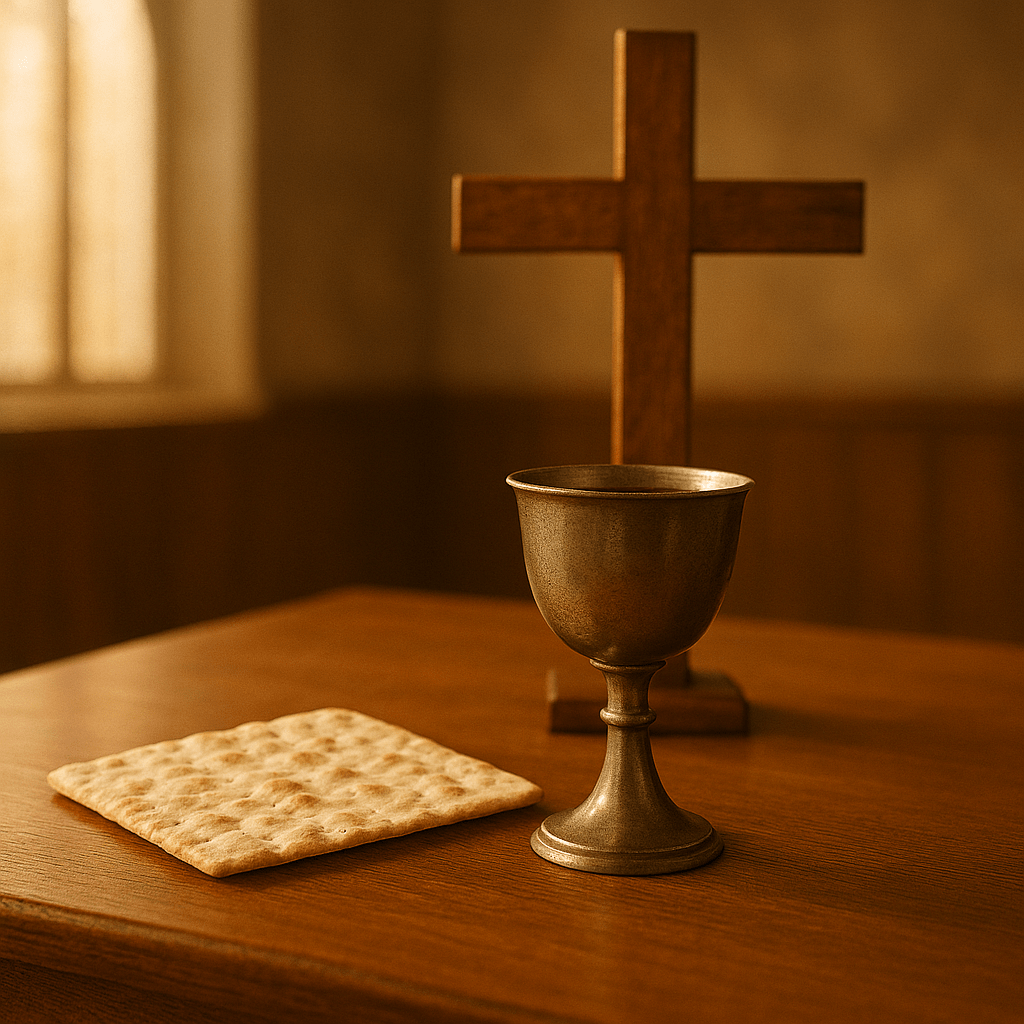
Much of this article has focused on identifying who ought not to partake of the Lord’s Supper. The harder question, however, is how this wisdom is applied in ordinary church life—especially in the many gray areas that do not present themselves as obvious scandals. While most would agree that a person openly and unrepentantly violating God’s law should not be admitted to the Table, pastoral care must also account for weaker consciences, incomplete understanding, and unseen struggles. It is here that the fencing of the Table serves the Church well. Elders are called to shepherd the flock entrusted to them and to guard the holy things placed in their care. This guarding is not a denial of grace, but an act of love, lest someone eat and drink judgment upon themselves, unaware of the seriousness of what they are receiving. As Scripture reminds us, “whatever a man sows, that he will also reap.”12 Fencing the Table, then, is not Presbyterian fastidiousness or clerical overreach, but a faithful attempt to do all things “decently and in order” under Christ’s authority.
It is not the OPC’s Table, nor any church’s Table, but the Lord’s. For that reason, baptized communicant members in good standing of Bible-believing churches are welcomed in good conscience. And for those who are visiting or traveling, a simple and charitable step is to reach out to the pastor or elders ahead of time—not as a burden, but as an opportunity for clarity, care, and mutual trust in Christ’s Church. The Church fences the Table not because grace is scarce, but because it is precious. To guard the Supper is to love Christ, to love His Church, and to love sinners enough to take His holiness seriously. Fencing the Table is not the denial of grace—it is an act of love.

- 1 Corinthians 11:28 “examine himself” ↩︎
- 1 Corinthians 5:11, emphasis mine ↩︎
- cf. Exodus 24:9-11, Psalm 41:9, Luke 22:19-20, Acts 2:42 ↩︎
- De Excommunicatione ↩︎
- 1 Corinthians 10:16-21 (koinōnia) ↩︎
- “catholic” means universal, not papal; that is, there is one church across all times, places, and peoples (Belgic Confession Art. 27; Heidelberg Catechism Q&A 54; Westminster Confession of Faith XXV.2) ↩︎
- Hebrews 13:17 ↩︎
- Acts 20:28, minor adjustment (yourselves to themselves) ↩︎
- John 13:30 “he immediately went out. And it was night” ↩︎
- Matthew 7:6 ↩︎
- It is the author’s belief that Judas did not partake; see Ron Henzel’s summary exegesis here: https://x.com/i/status/1686708431816634369 ↩︎
- Galatians 6:7 ↩︎

Leave a comment