
Have you ever met someone who you come to find out is “Christian,” yet there is nothing outwardly religious about the person? In fact, they seem to even be against a lot of what makes up the religion of Christianity. Perhaps the only Christian thing they have done was say a little prayer when they were young so they could consider themselves saved. You might even find them commonly saying things like “It’s a relationship, not a religion“1 and “Christ fulfilled the law, so we don’t have to live by it”. At best, if they are actually a Christian and not a pagan, there is a great chance that they are antinomian in their faith, meaning they do not observe any laws; in fact, they are actually anti-laws and/or strict practices with regards to their belief. They are anti-organized religion, meaning they oppose the institution of the traditional faith of orthodox Christianity. This will lead to the birth of many sins and is very destructive to the soul. Most arrive here from either deconstructing their faith, religious hurt, or misunderstanding of what God’s word says. Today, I hope to shed light on this issue and help balance the scales back toward a direction that both honors the laws of the Christian faith and the personal grace that flows from a relationship with God.
“To cast off the law under pretense of free grace is to turn grace into wantonness.” – Jeremiah Burroughs
Abuse of Grace
‘For you were called to freedom, brothers. Only do not use your freedom as an opportunity for the flesh, but through love serve one another. ‘ – Galatians 5:13
For Christians, grace is one of the most beautiful gifts of God. For it is by grace that we are even saved. Grace has freed us from the heaviness of adhering to strict laws for salvation. Yet it is that very same grace which many have abused over the years. We all know of those “Christians” who have, in some way or another, used the gift of grace as permission to sin. There is grace for that, so it really isn’t a big deal that I don’t attend church often. The Ten Commandments (moral law of God) aren’t really important now that we have grace in Christ. So what if I use foul language or get drunk now and then? There is grace in Christ. As you can see, slippery is the slope when it comes to the abuse of grace. By no means is grace a do-whatever-you-want and get-out-of-jail-free card. So then what is grace used for and what does righteous living look like? First let us walk through what antinomianism truly is.
Antinomianism: is the belief that under grace, moral law is not binding on Christians, leading to the idea that faith alone is sufficient for salvation apart from obedience. The Law is not only not required in a salvific way but also in a sanctifying way as Christians.
Antinomianism in its simplest form is a dismissal of the Law of God altogether. You can see how it can quickly lead to sin if we downplay and/or fully disregard God’s Commandments. We by no means want to make keeping the law a matter of salvation for ourselves, but on the other hand, if we throw out the law, we will never have anything to judge ourselves and our actions by. The Law is required to show us our sin and to show us our need for a Savior. This need doesn’t just abruptly cease to exist once we have found grace in Christ. This law is needed as a daily lifelong reminder of our sin and an example of how God calls us to live. Christ came to free us from the law by fulfilling it, not by abolishing it.2 With this proper understanding in place, we can continue to live by the law while resting in the fact that the law has already been fulfilled on our behalf by Christ and imputed to us by grace.
Free Grace theology3 is a term for those who believe, that responding to the “call to believe” in Jesus Christ through faith alone is all that is necessary to receive eternal life. You might ask how is this belief wrong? While it seems close enough this is still very deceptive once we break it down. We see that the emphasize is placed on the response to the “call to believe”, which is either believing or not believing. This can be correct in its simplest form but this is very vague and incomplete. You see we are saved by faith alone, however that faith is never alone. It is always accompanied by works4, and if we neglect to preach such truths as this we will surely lead others to misunderstand what saving faith is. If they only see believing as being important, then they will be lead to a form of “easy believism”5. The issue is that Free Grace Theology can make it easier to arrive at antinomianism, if we fully neglect the role of sanctification through obedience.
Another reason many seem to fall into becoming antinomian in theology is that they tend to have a dispensational view of the Old Testament. This means that they see the Ten Commandments as only applying to the Jewish people, not to Christians. They tend to separate the OT from us while insisting that we are in Christ and no longer under the Law. This mindset not only undermines the continuity of Scripture but also encourages a casual approach to sin, leading to spiritual complacency. Consequently, this is a very slippery slope to becoming lukewarm in one’s faith and falling into dangerous sins, as individuals may become desensitized to the importance of living a life consistent with the teachings of the Bible. Not to mention, Christ during His earthly ministry reinforced and upheld the Ten Commandments.
Do we still have a place in our heart for God’s Law while relying on His grace?
Are we guilty of using Legalism as a cop out for neglecting to obey God’s commandments?
Do you find yourself downplaying the law because it would spotlight some sinful behavior in your life?
Legalism: is a belief system or practice within Christianity that emphasizes strict adherence to laws, rules, or rituals as a means of achieving or maintaining a right relationship with God. Legalists often prioritize external behaviors and compliance with religious regulations over inner spiritual transformation or faith in Jesus Christ.
Now I would be doing us all a disservice if I didn’t briefly touch on the other side of the fence. Legalism is just a fancy word to describe a Christian who emphasizes strict adherence to laws, rules, or rituals as a means of achieving or maintaining a right relationship with God. This is known as works-based righteousness and justification, which we abhor because it neglects the need for Christ’s death. It relays the message that we are not dead in our sins and that we can work together with God to achieve our own salvation. On the other hand, we have this definition of “maintaining our relationship with God.” While this is a better understanding of applying the Law to our lives after Christ, we still need to realize that it is God who upholds us in a correct relationship. Because we have been once and for all justified through the work and blood of Christ on the Cross, not because we have upheld the Law. This by no means neglects the Law nor disposes of it. You can read more about Legalism here “Distorted Righteousness”.
Do we rely on our adherence to the Law more than our Faith in Christ’s finished work?
Are we guilty of holding the law over people in a shameful unhealthy way?
“To be freed from the law as a rule of obedience is a liberty that the gospel nowhere allows.” – John Owen
A Biblical example of Antinomianism
‘What shall we say then? Are we to continue in sin that grace may abound? By no means! How can we who died to sin still live in it? ‘ – Romans 6:1-2
Paul makes it very clear all throughout the book of Romans that we are not bound to sin any longer since grace has set us free, which is a profound statement about the transformative power of God’s love and mercy in our lives. He also never downplays the role of the Law in the believer’s life after having been introduced to grace, emphasizing that the Law serves as a guide and a reflection for our spiritual growth. In Paul’s understanding, the Law is always meant to be used as a measurement of what it is to be holy and as a mirror to reflect sin in our lives, reminding us of our need for repentance and the ongoing journey towards becoming more Christ-like in our daily actions. This duality of grace and law highlights the importance of living a life that honors God, rooted in both faith and obedience. Throughout all of Scripture, it is very important to realize that we can never neglect law for grace, and we can never discard grace for law. Holiness is required of God’s people, it can not be neglected.6 Never forget that delayed obedience is disobedience.
‘So the law is holy, and the commandment is holy and righteous and good. Did that which is good, then, bring death to me? By no means! It was sin, producing death in me through what is good, in order that sin might be shown to be sin, and through the commandment might become sinful beyond measure.’ – Romans 7:12-13
Grace does not merely forgive the sinner; it reforms the life of the sinner. The very same sins that the former self wished it could freely get away with no longer look appetizing to the redeemed individual. Grace is meant to give the believer a newfound zeal to be holy as our heavenly Father is holy. This is the transformative power of Grace when properly applied to sinners by the Holy Spirit. Grace doesn’t lead us into sin, nor is it meant to lead us towards slothfulness and or a full dismissal of the Law of God.
The Belgic Confession – Article 25: The Fulfillment of the Law
We believe that the ceremonies and symbols of the law have ended with the coming of Christ, and that all foreshadowings have come to an end, so that the use of them ought to be abolished among Christians. Yet the truth and substance of these things remain for us in Jesus Christ, in whom they have been fulfilled. Nevertheless, we continue to use the witnesses drawn from the law and prophets to confirm us in the gospel and to regulate our lives with full integrity for the glory of God, according to his will.
“Holiness is the inseparable fruit of grace.” – Stephen Charnock
A Different Outcome
‘and, having been set free from sin, have become slaves of righteousness.’ – Romans 6:18
Often times the best choice isn’t one or the other strictly but rather a middle ground or balance between the two. This is one of those cases: Antinomianism and Legalism are detrimental when left to themselves, each presenting unique pitfalls that can lead individuals astray. Legalism tends to neglect grace in an unwavering pursuit of works, fostering a mindset that equates righteousness with mere rule-following, often resulting in a heavy burden of guilt for those who feel they do not measure up. On the other hand, Antinomianism dismisses the commands of Christ in favor of the liberating concept of grace, potentially encouraging a license to sin that undermines the very heart of Christian teaching. Yet, if we combine the two in a balanced approach, we tend to discover that one can genuinely maintain a loving relationship with God through adherence to His law while simultaneously resting in the assurance of grace. This careful approach would serve to safeguard us from both abusing the law over others and neglecting its significance altogether, allowing for a faith that honors God’s commandments while fully embracing His mercy.
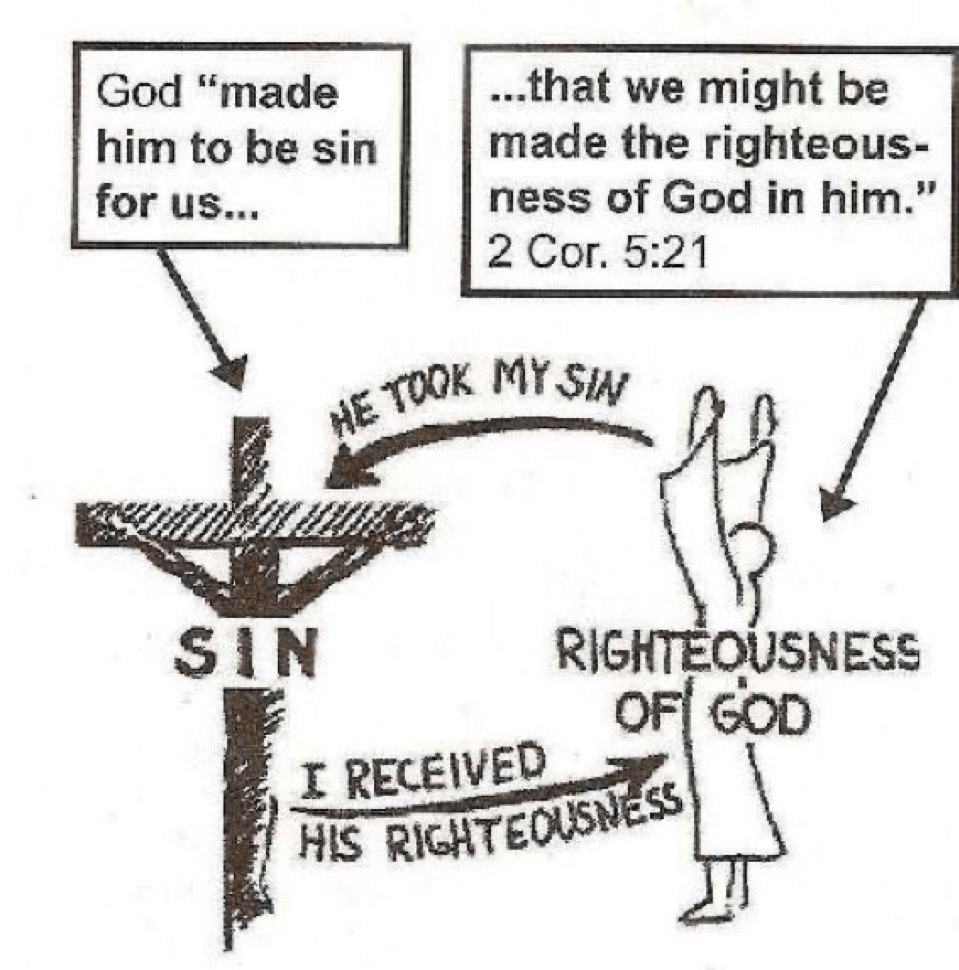
Let us, like Paul, become slaves to righteousness because of grace, for grace has set us free from sin, breaking the chains that once bound us. Because we are now free, we can use this newfound freedom to pursue righteousness rather than wickedness, embracing the goodness and virtue that God desires for us, which is laid out in the law. We are to work even harder now to live by the Law of God, for that is accomplished in living more like Christ, whose perfect example serves as a guiding light in our lives. While working hard towards the law, we rest even harder in the fact that Christ has already accomplished all that the law entails perfectly, fulfilling every requirement and demonstrating unconditional love and mercy.7 And that He has done this on our behalf and that it has been imputed to us; this is the essence of grace, a gift freely given.
‘But by the grace of God I am what I am, and his grace toward me was not in vain. On the contrary, I worked harder than any of them, though it was not I, but the grace of God that is with me.’ – 1 Corinthians 15:10
“The moral law remains the rule of obedience for all men, justified or not.” – William Perkins

- https://teddmathis.com/2025/04/10/the-problem-with-its-a-relationship-not-a-religion/ ↩︎
- Matt 5:17 ↩︎
- https://www.gotquestions.org/free-grace.html ↩︎
- James 2:14-17 & 2:26 ↩︎
- https://www.gotquestions.org/easy-believism.html ↩︎
- 1 Peter 1:16 ↩︎
- https://christoverall.com/article/concise/applying-the-law-of-moses-to-the-christian-life/ ↩︎
