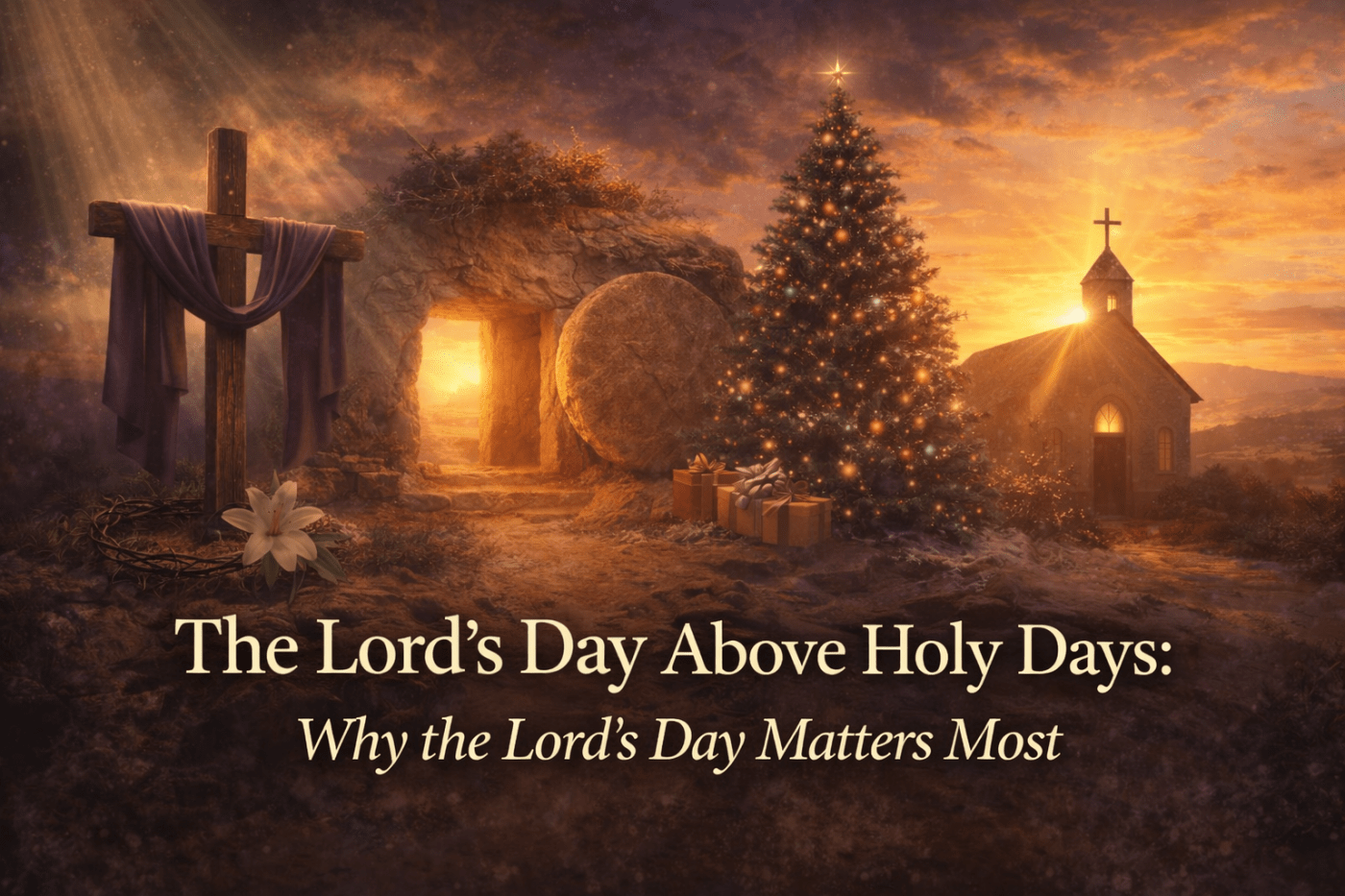
It is no surprise for those who know me and/or follow the site that I am a fan of the Puritans. I love their views on God’s sovereignty, man’s depravity, the power of Christ’s atonement, and family worship (which is the application of teaching these things and applying them to our closest neighbors). Another aspect is their high reverence, is for the Sabbath, otherwise known as the Lord’s Day. I think the Puritans recovered the purity of setting apart the Lord’s Day for worship and holiness, which had otherwise been trampled on by the culture of men and the Roman Catholic Church during their time (still ongoing). The Puritans knew that at the center of recovering the Gospel and correct doctrine also lay the recovery of the Sabbath. Preserving a correct and healthy view of the Lord’s Day would be crucial for the health of the Church and the perseverance of the saints. It is no more less crucial now than it was then.
“God hath set apart one day in seven for Himself; to add other stated holy days of human invention is to be wise above what is written.” – Thomas Watson
The Lords day
‘And on the seventh day God finished his work that he had done, and he rested on the seventh day from all his work that he had done. So God blessed the seventh day and made it holy, because on it God rested from all his work that he had done in creation. ‘ – Genesis 2:2-3
Most of us are familiar with the creation account that God created all things in six days, and on the seventh day, He rested. The fact that He rested and didn’t work distinguished this day set apart from the others, making it Holy. This day, which was Saturday according to Jewish observance, was later established in the Ten Commandments, as the fourth commandment is to remember the Sabbath and keep it Holy.1 It was kept Holy by designating it as a day of rest and worship for all people. It was not optional; it was mandatory for God’s people. The purpose was not only to be rejuvenated physically but also spiritually. It was a day to observe all that God has done for His people and all the many blessings He has bestowed upon us. This fueled their worship of the Creator in an outpouring of praise and thanksgiving.
“Remember the Sabbath day, to keep it holy.’ – Exodus 20:8
Now Judaism, Seventh-day Adventists, and a few others still mainly observe the seventh day as the Sabbath. And you might have asked yourself before, why is it that we observe and hold our Sabbath on Sunday, the first day of the week? Well, while the Sabbath Spirit is still rooted in the Creation order of institutional day of rest and holiness, which is still upheld by Christians, the day of observance changed due to Christ’s finished work on the cross and rising from the dead on the first day of the week. Therefore, we see Christ Himself honoring this new covenant day. So the resurrection moved the sacred day of the Sabbath from the old creation Sabbath (Saturday) to the new creation Lord’s Day (Sunday). Thus, Sunday became the covenantal memorial of resurrection and redemption. Also, we see this fully taking effect in 336 AD, when the Council of Laodicea officially honored Sunday as the Sabbath day.2 And next, you might ask, is there anywhere in Scripture that this is shown to be true?
‘On the first day of the week, when we were gathered together to break bread….’ – Acts 20:7
‘On the first day of every week….’ – 1 Corinthians 16:2
Now why do some refer to it as the Lord’s Day? Well, it is referred to that because that is simply what John called it in his letter on the island of Patmos. Another really good reason is that everything we do on that day is in observance of what God has done for us, namely through our Lord Jesus Christ, and we are able to observe all of this by the gift of the Holy Spirit. The Lord’s Supper belongs especially to Christ to be observed on the Lord’s Day. Our worship is to be done in Spirit3 within the Lord’s house on the Lord’s Day.4 What took place on the new Sabbath was that the church assembled together to preach the word along with observing the Supper, and it happened specifically on the first day.5 These are very important truths for us to continue to live out.
‘I was in the Spirit on the Lord’s day….’ – Revelation 1:10
The Westminster Directory for Public Worship – Touching Days and Places for Publick Worship.
THERE is no day commanded in scripture to be kept holy under the gospel but the Lord’s day, which is the Christian Sabbath.
Festival days, vulgarly called Holy-days, having no warrant in the word of God, are not to be continued.
Nevertheless, it is lawful and necessary, upon special emergent occasions, to separate a day or days for publick fasting or thanksgiving, as the several eminent and extraordinary dispensations of God’s providence shall administer cause and opportunity to his people.
As no place is capable of any holiness, under pretence of whatsoever dedication or consecration; so neither is it subject to such pollution by any superstition formerly used, and now laid aside, as may render it unlawful or inconvenient for Christians to meet together therein for the publick worship of God. And therefore we hold it requisite, that the places of publick assembling for worship among us should be continued and employed to that use.
The Puritan View and The Corruption Holy Days
“Everything that I command you, you shall be careful to do. You shall not add to it or take from it.’ – Deuteronomy 12:32
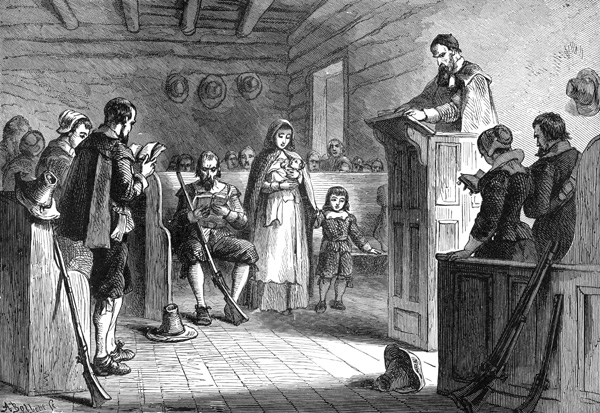
Now it is important for our context to lay out the history of what was taking place in the 1600s among the Puritans so that we may know why they stood so strongly against holy days and festivals regarding the Church. During this time, the Puritans had gained a name for themselves by purging the Church of all the impurity of the Roman Catholic Church of that time, hence reforming towards pure worship. By the Tridentine calendar (the calendar in force in 1640), the universal Latin Church had roughly 36 holy days of obligation besides Sundays, such as Christmas, Epiphany, Easter cycle feasts, Ascension, Corpus Christi, Assumption, All Saints, apostles’ days, Marian feasts, and major saints’ days. While the Anglican Church had split from Rome, it still kept a vast majority of them even after they split from the Roman Catholic Church. This was a major issue in the minds of the Puritans, as they saw these days as man-made and being more harmful than helpful to the body of Christ.
The main reason behind their disdain for man-conceived holy days was their view that God alone determines how He is to be worshiped—what He has not commanded is not to be introduced.6 They saw no command or example in the New Testament for annual observance of these days. Yet what we do see set up for us as an example and command is the Lord’s Day and the observance of the Lord’s Supper. There was no need for an Easter sunrise service because every Lord’s Day already celebrates the resurrection. There was no reason to observe Christmas when every Lord’s Day was already a day of rejoicing that Immanuel has come.
The secondary issue of concern was this idea of binding the conscience to the mandatory obligation of observance. Since the word of God does not command the observance of Christ’s birth or resurrection as annual feast days, the church has no authority to bind the conscience to observe them. They were completely fine with preaching on the incarnation in December, a sermon on the resurrection in spring, or voluntary reflection on Christ’s birth. What they opposed were statements and actions such as “You must attend worship on December 25.” “This day is holier than ordinary days.” “The church requires this feast.” or “we require you to observe Advent and/or Lent every year”. Such beliefs crossed the line from edifying usefulness into binding law; therefore, once something is framed as law, conscience is involved. And only God alone is the ruler of thy conscience, not the Church. Let us not forget that Rome had many requirements and penalties that were binding, such as Mass attendance, ~ prohibited servile labor ~ imposed fasting/vigil duties ~ attached spiritual penalties ~ and treated such omissions as sinful.
“No church may bind the conscience to religious days which Christ hath not appointed.” – John Owen
They believed that the third issue with these days was that it had become occasions for carnal excess rather than holy worship. Their view was that the church calendar (Christmas, Lent, Easter, etc.) was a part of what they believed were corruptions from the Roman Catholic Church that were validated in what came from them. From these days flowed many sins and abuses of worldly things by the people of God and the surrounding culture where these days were celebrated. Especially with Christmas: drunkenness, revelry, social disorder. In England, Christmas was often more like a festival of excess than of reverence. Not to mention how holy days became these sorts of elevated days of importance, more than that of the Lord’s Day. People would skip the Lord’s Day of worship but eagerly keep Christmas, saints’ feasts, and revelry days. This view led to many neglecting the Lord’s Day while all the more multiplying the calendar with holy days. Not to mention the slothfulness that came with these holidays, in shutting down our vocations for these mandatory observances.
Between these views of the Roman Catholics and the views of the Puritans, there were many middle-ground types of views. Even among the Reformed, many held such holidays to be permissible as long as they were used for edification and weren’t treated as binding. Many Protestants observe Easter and Christmas with liberty while not binding the conscience. Yet, I think there is still an unhealthiness among our current observations of these holidays. Just think about it: how often do you hear the resurrection or the birth of Christ preached and taught outside of the month of December and the weeks leading up to Easter? How many of us add additional service options during these specific weeks? How many guests walk through those doors for the first time only because it is the only time of the year they think they can’t miss service in order to keep their Christian card? Think about how we change our music and programs to fit the season. When all these things take place, it is hard to treat these days with the proper reverence compared to other normal Lord’s Days of the year, therefore leading to an unhealthy reverence of these days alone.
“What returns weekly by divine institution needs no rival annual solemnities.” – John Flavel
Here is an example from my own church: we have two special non-Lord’s Day services within the yearly church calendar. We observe the Christmas story on Christmas Eve, and we celebrate “Maundy Thursday,” which is the last night prior to Christ being betrayed and when the Lord’s Supper was first instituted. Our church observes the Lord’s Supper once a month, usually on the same Sunday of each month; however, we move it to our special services in December and April. Both of the services usually have a large attendance due to many extra family members and guests being in town for the holidays. Here’s the problem though: I think we are robbing the Lord’s Day of its means of grace, and I believe we end up doing more harm than good by switching our observance of the Lord’s Supper. First, what I mean by the statement that we are robbing the Lord’s Day is simply the fact that the Lord’s Day is marked out for the ordinary means of grace. This includes things like worship, the reading of Scripture, the preaching of Scripture, baptism, and the Lord’s Supper. These are some of the most basic marks that make up a true Church. By moving the Supper that we already only observe once a month, it seems to me that we are taking away one of the means of grace that sets apart the Lord’s Day. It is by these ordinary means of grace that we grow, are fed, and nourished. Secondly, as I said above, these special services are some of our most guest-heavy services of the year. Why would we intentionally want to move our observance of the Lord’s Supper to the special services that perhaps have the most non-believers among them? Being mindful that this is a meal for the family of God’s people, why would we want to tempt others to participate? Given that we do proclaim a “soft” fencing of the table every time we do the Lord’s Supper, countless times I have observed non-Sunday (Lord’s Day) attending folks who are non-believers partaking in the Supper because it has been moved to these special non-Sabbath services. We should be doing our best not to starve the people of God, while also protecting those who would bring about harm to themselves by partaking in it. I believe these things are causing more harm than good for these two reasons. Nevertheless, I love my church dearly, but we all have our own opinions, and no church is perfect.
“I do not condemn the churches which observe other days for meeting, provided they guard against superstition.” – John Calvin
Conclusion
My thoughts are not far off from what the Puritans thought and observed back in the 1600s. We see no biblical command to observe these so-called holy days. The reason we see no mention of these days is that observing the Lord’s Day weekly is sufficient, and there is no need to add to it.7 That is not to say we can’t come together on non-Sundays to worship and/or teach; simply that we should not elevate any day above the Lord’s Day, nor should we rob things from it. We should continue to have our weeks revolve around the Sabbath alone, not holidays. Adding holy days allowed for the culture to pervert them with temptations and distractions, which over time led to more corruption entering the church and taking things that belonged to God alone to use for wicked means. Our churches would do well to restore proper honor and respect to the Lord’s Day and quit allowing these holy days to take precedence over our regular Sabbath observance. May this article and the many other works on this site be a benefit to you and your soul. May grace be with you.
“The weekly Sabbath remains by moral equity; ceremonial feast days are ceased in Christ.” – William Perkins

- Exodus 20:8–11 ↩︎
- Church Law (c. 336 AD): The Council of Laodicea (Canon 29) officially transferred the obligation of rest from Saturday to Sunday, forbidding Christians from “Judaizing” (resting on Saturday). ↩︎
- John 4:24 ↩︎
- Hebrews 10:25, 1 Thessalonians 5:11 ↩︎
- Acts 20:7, Colossians 2:16-17, 1 Corinthians 16:1-2, Revelation 1:10, Hebrews 10:24-25 ↩︎
- Deut. 12:32 ↩︎
- https://thoughtsinthelight.com/2026/02/23/the-beauty-of-simplicity-in-worship/ ↩︎

Leave a Reply