Flags are an important glimpse into what a people want to be known for or are perhaps already known for. They usually carry a great deal of pride in being associated with such imagery, from the flags of a nation to banners of war. The history of mankind has always been linked to the colors and imagery assigned to people and places. In light of our 250th anniversary as a nation, the founding of our nation is no different, as it too had its many different flags, from the well-known Betsy Ross colonial flag to Benjamin Franklin’s “Join, or Die” flag. Many different movements have rallied behind flags, but I believe there is one small flag that stands out among the many others.
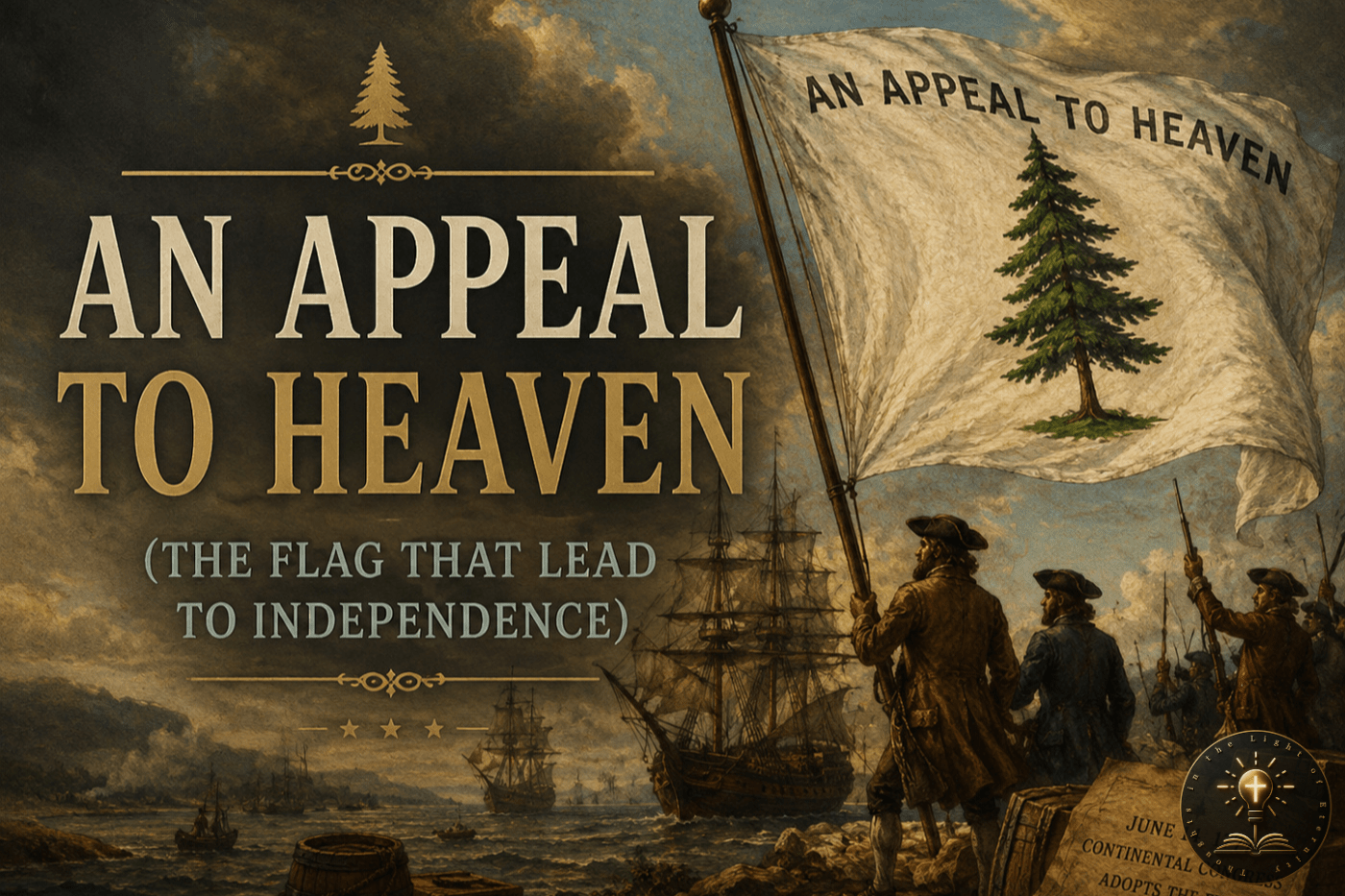
This flag is known as the “An Appeal to Heaven” flag (also known as the Pine Tree Flag) features a green pine tree on a white background with the motto “An Appeal to Heaven.” Commissioned by George Washington in 1775 for the first American naval cruisers, it originally symbolized colonial resistance and divine intervention against British tyranny.
The Appeal
The phrase “An Appeal to Heaven” derives from philosopher John Locke’s Second Treatise of Civil Government. It reflects the concept that when a government abuses its power and citizens have no earthly authority to appeal to, they have the right to “Appeal to Heaven” (i.e., take up arms or rebel in the name of God-given rights). This notion is significant not only in philosophical discussions but also in historical contexts, as it has inspired various movements and revolutions throughout history where oppressed groups have sought to reclaim their rights. Now many will vary on the issue of whether or not a Christian has the right to rebel or if they must be in submission to civil authority always, no matter what the circumstance. Some argue that divine authority supersedes human authority, particularly when the latter is enacted unjustly, while others maintain that true faith requires unwavering obedience to governmental structures elected by God’s hand. We will not be addressing that here, but encourage a read through our previous article on the matter to better understand the complexities surrounding this discussion and to gain insight into various theological perspectives.
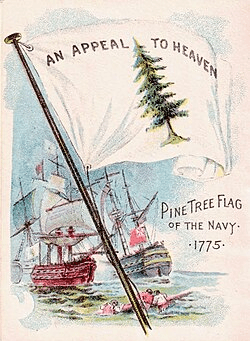
It also served as the official naval flag of Massachusetts in 1776 and heavily influenced the design of the state flag of Maine. Designed in 1775 by Colonel Joseph Reed, who was a close aide to George Washington and his secretary, this flag became a symbol of resistance and unity during a tumultuous time in American history. The British became very familiar with the flag as it was prominently flown on a squadron of six schooners commissioned under Washington’s authority to intercept British supply ships, disrupting their logistics and bolstering the American cause. This strategic deployment not only showcased the bravery of the Colonial forces but also solidified the flag’s status as an emblem of independence and determination in the face of oppression, making it a significant piece of Revolutionary War history.
“And where the body of the people, or any single man, is deprived of their right, or is under the exercise of a power without right, and have no appeal on earth, then they have a liberty to appeal to heaven, whenever they judge the cause of sufficient moment. And therefore, though the people cannot be judge, so as to have, by the constitution of that society, any superior power, to determine and give effective sentence in the case; yet they have, by a law antecedent and paramount to all positive laws of men, reserved that ultimate determination to themselves which belongs to all mankind, where there lies no appeal on earth, viz. to judge, whether they have just cause to make their appeal to heaven.” – In chapter 14 Second treatise on Government


Leave a Reply